In this article
Put clean, well-fitted protectors on every chair foot, keep the floor under the table free of grit, and check the pads every few weeks, because a worn pad or one embedded crumb can scratch as badly as a bare leg. The floor maker's own care advice is the same: remove grit regularly, use felt under furniture legs, and don't drag heavy pieces.
Stop the chair that is leaving a mark
If you notice a new line after pulling out a chair, pause before moving it across the same spot again. Lift it clear if you can do so safely, ask for help if needed, and set it somewhere you can inspect it without dragging. Photograph the mark before cleaning or treating it.
Clear loose debris from the chair's usual path using your floor's approved method. A hardwood-floor maker recommends regular grit removal and felt under furniture legs, while warning against dragging heavy furniture. These measures work together; attaching a pad does not make a dirty floor irrelevant. See the hardwood care guidance.
Find the floor's care instructions if you have them. Solid wood, engineered wood, laminate and vinyl with a wood appearance should not share a cleaning or repair plan by default. If the floor was recently refinished, ask the finisher when furniture, protectors and rugs may return.
Check every foot, including the rear legs
Bring a flashlight and examine the underside of all four feet. Check the other dining chairs too, rather than assuming the one nearest the visible mark is the only problem.
- Is a pad missing, peeling at an edge, or worn through?
- Is hard grit embedded in the contact surface?
- Is a plastic or metal glide cracked, loose, or exposing a fastener?
- Does the chair rock, or has one foot been built up with extra layers?
- Does the foot sit flat, or does an angled leg contact the floor at an edge?
Don't pry out a factory glide or tighten a wobbly joint blindly; check the chair's assembly or parts instructions. If a chair is unstable or a screw is exposed, take it out of use until it's fixed. Another layer of felt won't repair a chair.
Match the protector to the foot and the floor
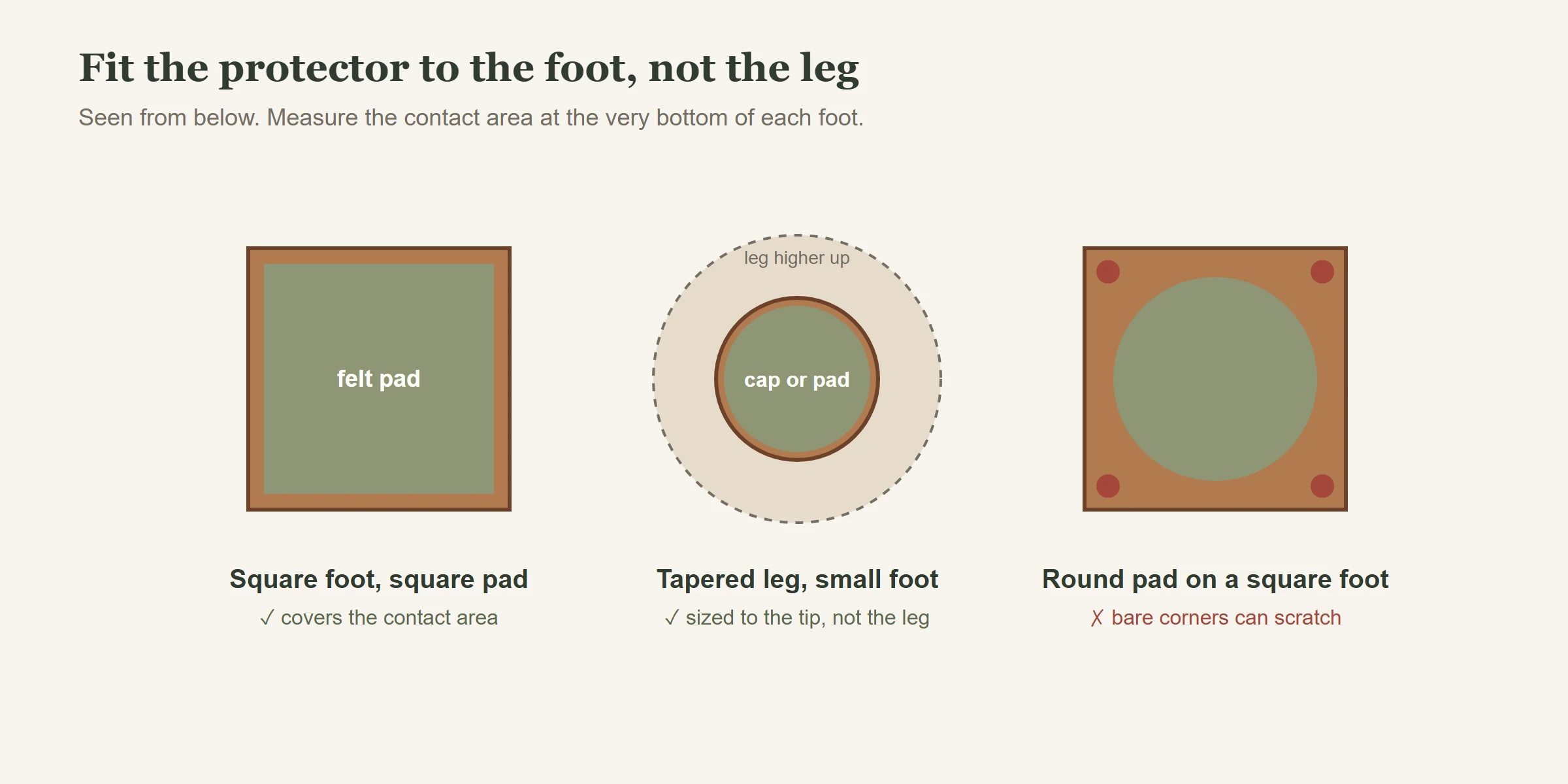
Record the shape and usable contact area at each foot. Measure in inches and look at the bottom, not just the width of the leg higher up. A tapered leg or an existing glide can change where a protector actually sits.
Example: a chair with a flat 1¼-inch-square foot needs a square pad that covers that area, not a round one sold "for chairs." Measure each style of chair you own.
| What you find | What to establish before choosing protection |
|---|---|
| A flat, accessible foot | Whether the protector's shape and attachment method suit the whole contact area |
| A round or tapered leg | Where a cap or sleeve is meant to grip, and which dimension its maker asks you to measure |
| An angled leg or swiveling glide | Whether an approved replacement maintains contact in the chair's normal position |
| A hollow metal leg | The correct insert or cap; a fixing intended for solid wood is not an automatic substitute |
Check the floor maker's permitted materials as well as the protector's floor-use directions. Felt, a hard glide and a nonslip cap are different interfaces. A label saying hard floors does not settle compatibility with your finish, and making a chair harder to slide is not the same goal as helping it move smoothly.
Prepare the attachment surface with care
One felt-pad installation sheet calls for a clean, smooth, dry surface, pressure during attachment and time for the bond to develop. It also discusses surface treatments that should not be transferred to an unknown chair finish. Read the attachment instructions alongside the directions for the actual protector you choose.
Follow the pad's own preparation, pressure and wait times. Never stick a new pad over loose felt or old glue. Nail-on or screw-in protectors only belong on legs whose maker allows them.
Once the chair is back upright, check that every foot sits normally and that the protector has not shifted or curled. A floor-maker care sheet emphasizes secure attachment to a flat surface and keeping the felt in good condition. It notes that factory glides may sometimes need attention, which is a reason to check the chair design rather than remove every glide indiscriminately. See the coated-wood floor care sheet.
Keep grit out of the protected area
Make the space under the table part of the normal meal cleanup. Lift chairs as needed to reach loose crumbs and grit, using the cleaning method your floor permits. Look at the felt itself when you move a chair for cleaning.
The care sheet linked above specifically warns about crumbs rubbing between felt and the floor. If debris will not come away using the protector's permitted cleaning method, or the contact layer is worn, damaged or coming loose, replace it rather than relying on its appearance from above.
Recheck any chair that moves rooms, comes out for guests or gets a replacement foot. Note which pads fit which chairs so the next replacement is quick.
Decide whether a rug fits your dining routine
A rug may suit the room, but check the complete arrangement before ordering. Mark its proposed boundary with a floor-safe method, pull each chair out to the position actually used, and see where all the feet land. Include the person at the end of the table, not just the easiest seat to reach.
The floor maker's instructions for rugs and underlays matter. One hardwood-floor FAQ specifies breathable, non-staining protection and excludes certain backings for its floors. That is not a rule that every rug or pad is compatible with every wood finish. Read the floor-protection and rug guidance before choosing the backing.
If a chair repeatedly crosses the rug edge, reconsider the footprint or arrangement. Plan how you will lift and clean beneath the rug and respond to meal spills. A rug that makes those tasks awkward may not suit the way the dining area is used; bare floor with compatible, maintained chair protection can be a more manageable setup.
Separate prevention from repairing an existing mark
A felt pad cannot erase damage already there. After loose dirt is removed with an approved method, describe what remains: a removable-looking streak, a change in sheen, a scratch, or an indentation. Do not assume that each needs more scrubbing or the same repair pen.
Keep the photo and floor information, and ask the floor maker, installer or refinisher what repair fits your finish. Skip the furniture polish and household abrasives; fix the chair feet now, and treat the mark as a separate job.
Make the check easy to repeat
Tie inspections to a task you already do, such as cleaning beneath the dining table. Check sooner if a chair begins scraping, a pad shifts, or a new mark appears. Keep suitable replacements and the attachment instructions together, and explain the routine to anyone who regularly moves the chairs.
Start with the chairs you have: clear the paths, inspect the feet and fix anything loose. Buy new protectors only where fit or wear calls for it. For cleaning the chairs themselves, see the furniture cleaning guide.
Monthly chair-foot check
- Every pad present, flat and firmly attached
- No grit, hair or crumbs embedded in the felt
- No cracked glides or exposed nails or screws
- Chair sits level, with no rocking
- Floor under the table swept with the approved method
Common questions
Do felt pads really protect wood floors?
Yes, when they're clean, the right size and firmly attached. Felt that collects grit or wears through can scratch, so check and replace pads as part of routine cleaning.
How often should I replace chair pads?
Whenever a pad is worn thin, peeling, compressed hard or holding grit that won't come off. On heavily used dining chairs, that can be a few times a year.
Is a rug under the dining table a good idea?
It can be, if every chair stays fully on the rug when pulled out and the rug pad is one your floor maker allows. Chairs that catch the rug edge cause their own problems.
Can I remove chair scratches myself?
It depends on whether the mark is in the finish or the wood. Ask the floor maker or a refinisher what suits your floor before trying a repair product.