In this article
For most finished wood furniture, dust with a soft, dry cloth, then wipe with a well-wrung damp cloth if the maker allows it and dry the surface immediately. Use a little mild detergent only for sticky spots, and skip alcohol, ammonia and abrasive pads. Furniture doesn't need to be "fed" with oil; conservators note that oil can't fix a dry room and some polishes leave residue.
What are you actually cleaning?
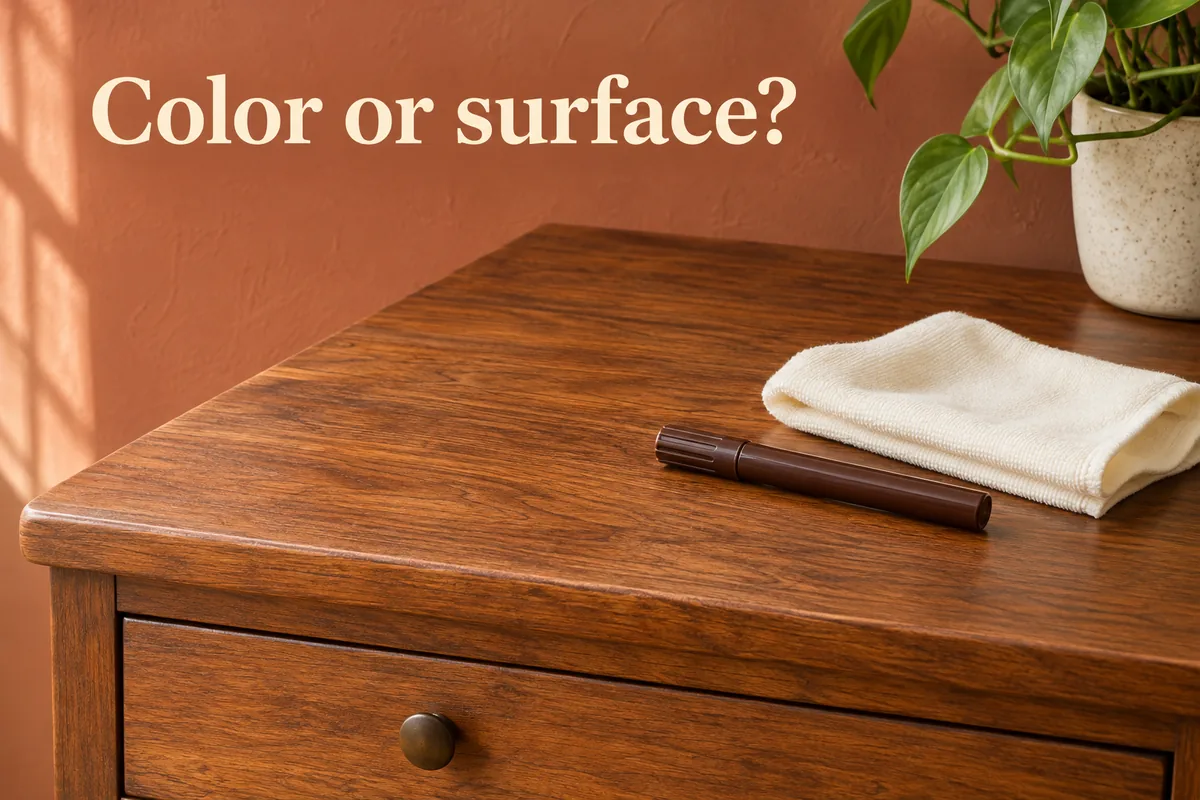
The visible surface might be a clear coating over solid wood, a painted panel, an oiled tabletop, or real wood veneer over another material. The useful question is what is on top and what condition it is in. A walnut color does not identify a finish, and a matte surface is not necessarily unfinished.
Look beneath a drawer or table for a model label, then find the care page or receipt. If you have several similar pieces, match the instructions to the exact item. Do not copy a floor-cleaning routine onto a coffee table simply because both look like wood.
For many of its coated wood surfaces, one furniture maker permits a slightly damp cloth, prompt drying, and mild detergent for persistent spots, while advising against alcohol, ammonia, petroleum-based cleaners, and polish buildup. That is useful evidence for those finishes, not permission to use the same mixture on every piece. See the finish-specific care instructions.
Build a simple routine before treating a stain
Clear the surface so you can see the whole area. Lift objects rather than pushing them across it. Check the underside of a vase, tray, or coaster for grit and moisture before putting it back.
Begin with a fresh, soft cloth for loose dust. Fold it so you can turn to a clean face rather than carrying the same dirt around the tabletop. Where the maker permits damp cleaning, wet the cloth away from the furniture and wring it thoroughly. It should not leave puddles or water collecting at seams. Wipe a small area, then dry it with a second soft cloth.
Two cloths, one barely damp and one dry, keep moisture under control. If you use a cleaner, follow its dilution and wipe it off as directed.
Why does the table still feel sticky?
A sticky patch where someone ate might be a surface deposit. A whole tabletop that stays tacky, catches lint, or changes sheen after cleaning deserves a closer look. Describe what you see before selecting another bottle: Is the problem local or widespread? Did it appear after a polish? Is the surface also peeling or soft?
On a modern, sound finish with an approved cleaning method, try that method in an inconspicuous spot first. Let the spot dry completely and inspect it from the side in ordinary light. If the finish looks or feels different, stop. A successful test on one item does not establish compatibility with another.
Care guidance also warns that overusing or switching products can harm a finish, and some makers specify plain water without soap for their own finishes. Use the instructions for your piece.
Should you use vinegar, alcohol, or a scrub pad?
Do not choose a treatment from its reputation as natural, gentle, or powerful. Check whether the actual furniture finish and the cleaner's directions allow it. Alcohol is specifically excluded by some finish-care instructions. A pad that seems soft in your hand is not automatically approved for a coated tabletop.
Don't stack experiments. If one method fails, adding vinegar, then oil, then a scrub pad leaves you guessing what caused any new dullness. Write down what you've already tried.
Does wood need oil every time it looks dull?
Cleaning, adding gloss, and maintaining an oil finish are separate tasks. Dust on a coated table does not by itself establish a need for furniture oil. An oiled piece may have a maintenance routine, but the correct product and timing depend on that system.
The Canadian Conservation Institute explains that furniture does not need to be fed and that adding oil cannot compensate for an unsuitable dry environment. It also cautions that some polishes leave residues or affect finishes. Its guidance is especially relevant when preserving older furniture. Read the conservation guidance on wood care.
Keep a short note for each piece: finish, approved cleaner, last treatment and anything that caused trouble.
What changes for veneer, bare wood, or antiques?
Real wood veneer is a surface layer, not a cleaning exemption. Follow the finish instructions and avoid leaving liquid at damaged edges or seams. If you see lifting, bubbling, exposed substrate, or a loose edge, handle that as damage rather than an invitation to scrub more.
Unfinished wood and sensitive historic finishes need a different assessment from a sound modern coating. Do not use the damp-cloth routine above without suitable guidance. For a valuable or inherited piece with an unknown finish, a conservator can help you preserve what is there instead of accidentally removing it.
When is a mark a repair problem?
Pause if color transfers to the cloth, the coating becomes softer, the surface starts flaking, or a new dull patch appears. Take a photo, keep the product labels, and note the treatment sequence. Do not cover the area with another polish just to make the photograph look better.
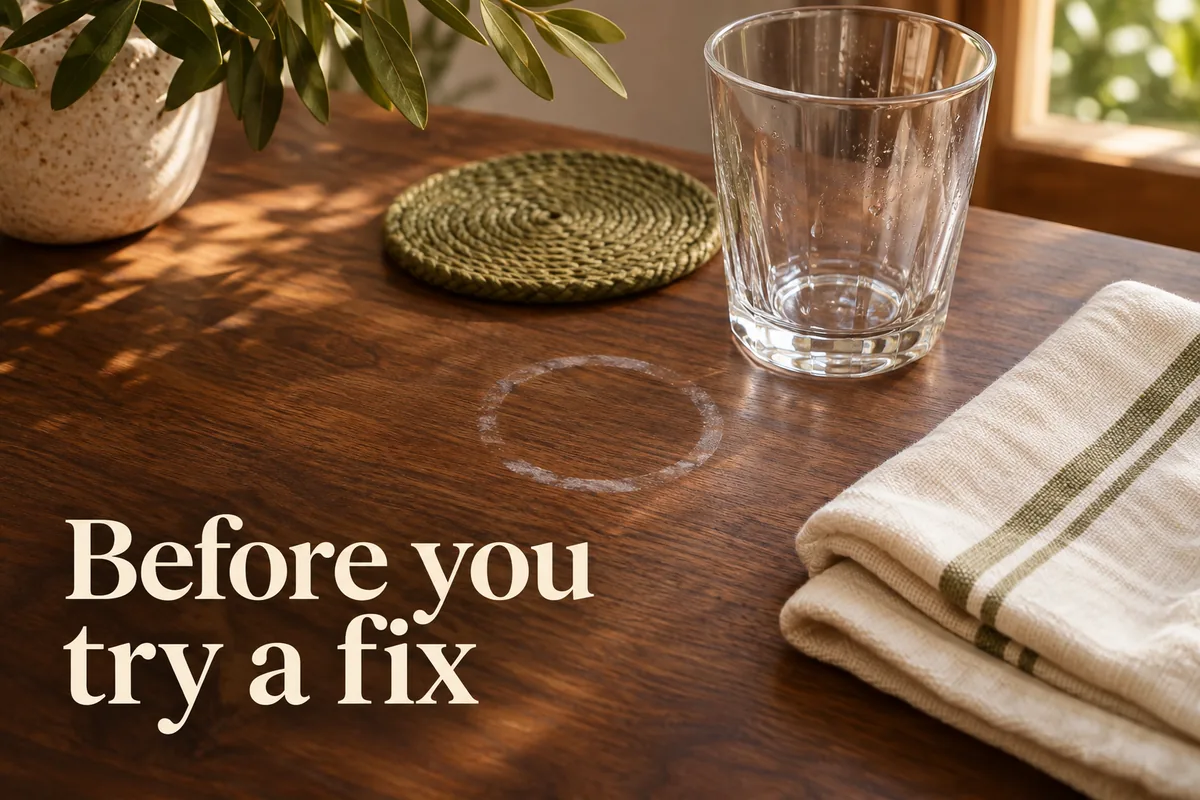
A white ring after a cold glass, a dark stain, a dent, and a scratch through the color are different problems. Once loose dirt is gone, repeated cleaning may add work without addressing the damage. Identify the mark, protect the piece from another spill, and choose a repair approach suited to its construction and finish.
Keep working through your next question
Work out what a white ring needs. Identify solid wood, veneer, and MDF.
Stop and get advice if
- Color comes off on the cloth
- The finish turns soft, sticky or starts flaking
- A new dull or white patch appears
- Veneer edges lift, bubble or show the core
- The piece is antique, valuable or has an original finish you want to keep
Common questions
What is the best thing to clean wood furniture with?
For most finished pieces, a soft dry cloth for dust and a well-wrung damp cloth for grime, dried immediately. Use a mild detergent only if the maker allows it.
Can I clean wood furniture with vinegar?
Only if the finish maker allows it. Acidic and solvent cleaners can dull some finishes, and "natural" doesn't mean safe for a particular coating.
Should I oil or polish wood furniture regularly?
Usually not. Conservation guidance says furniture doesn't need to be fed, oil can't make up for a dry room, and some polishes build up residue. An oil-finished piece may have its own maintenance product.
How do I clean veneer furniture?
The same way as solid wood with the same finish, but keep liquid away from edges and seams, and stop if the veneer lifts or bubbles.