In this article
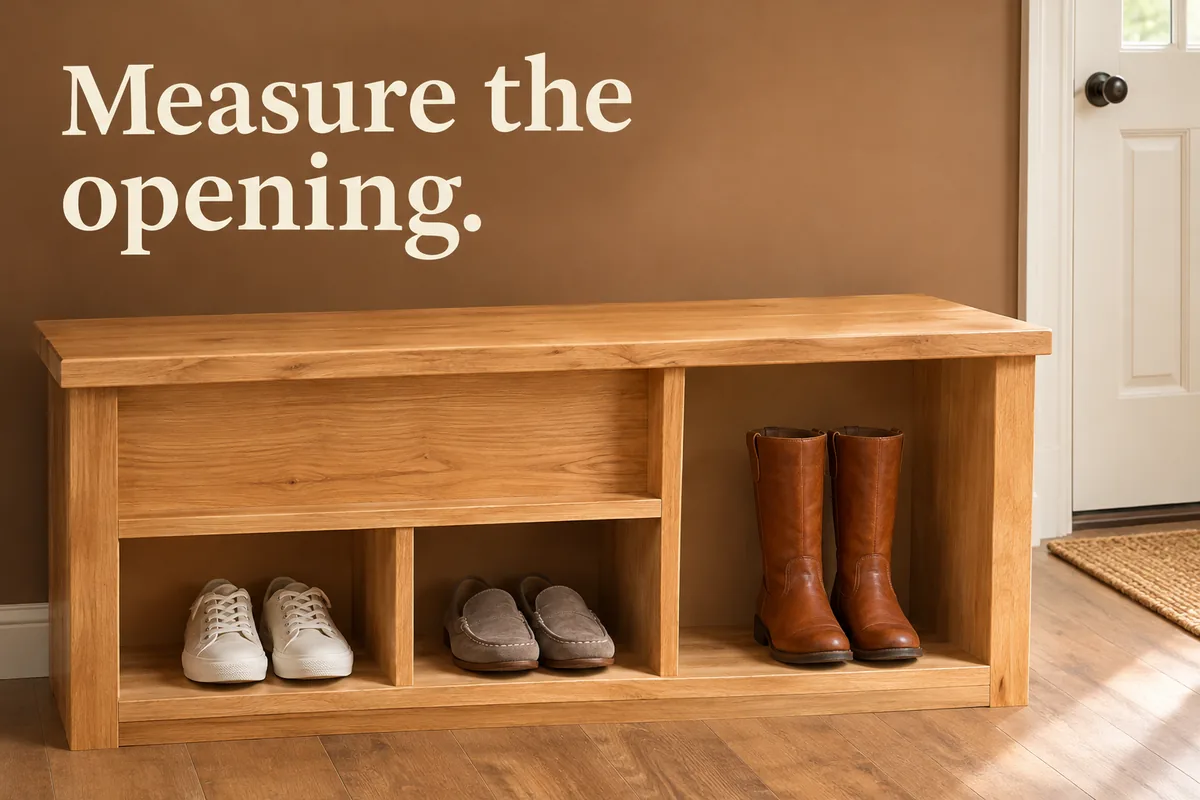
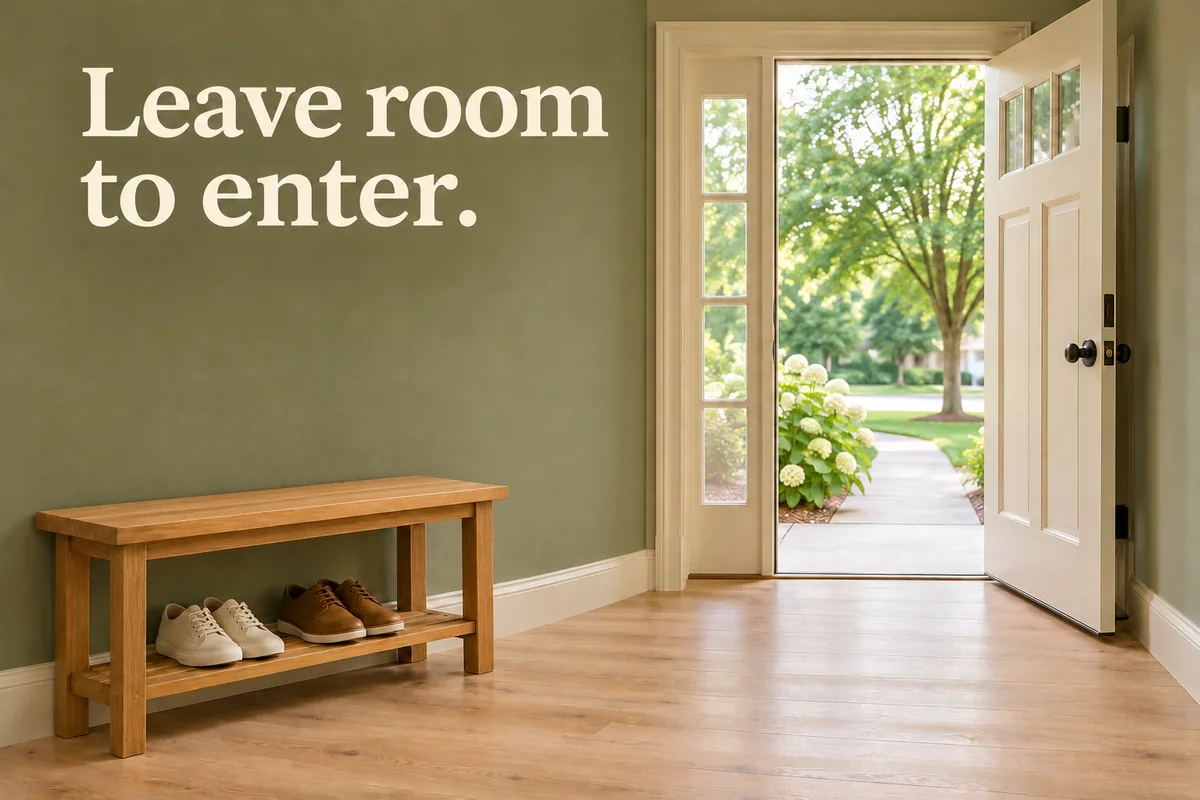
An entryway bench fits when the door still opens fully, people can walk past it with bags, someone can sit to change shoes, and the storage holds the shoes you actually wear. Measure the door swing and walking route first, then the bench's assembled size, seat height and clear storage openings. Lay a cardboard outline on the floor and walk through a normal arrival before you buy.
Keep the door and the route through the entry clear
Begin with the entry as it is used on an ordinary day. Open the front door through its full normal movement, including the handle, then check nearby closet and interior doors. Notice where you stand to unlock the door, carry groceries inside and turn toward the rest of the house. That movement needs to remain possible after the bench arrives.
The U.S. Fire Administration's home escape planning guidance tells households to keep doors and windows unblocked. Keep that principle in the layout: neither a bench nor the shoes stored around it should obstruct an exit. A furniture arrangement that requires moving the bench to use the door needs another location.
Check the entry with the door closed as well as open. A bench may clear the swinging panel but leave you squeezed between its corner and a closet while taking off a coat. Include the things that regularly travel through the space, such as a work bag, laundry basket or stroller, instead of judging the route while it is empty.
Measure the bench and the space around it
Use inches and sketch the entry from above. Mark the door hinges, the direction each door opens, stairs, floor vents and anything fixed to the wall. Measure at floor level as well as seat level: baseboards, trim and a projecting leg can change where furniture actually sits.
| Record this | Include it in the trial |
|---|---|
| Usable wall length | Trim, corners and anything that keeps the bench from sitting where planned |
| Assembled width and depth | The farthest projecting seat edge, legs, back and handles |
| Door movement | The full panel and handle path, plus the space you use while opening it |
| Seated use | Your feet, knees and movement while putting on the shoes you wear |
| Storage access | Drawers, doors, baskets or a lifting seat in their open position |
Example: a bench 36 inches long and 14 inches deep needs a 36-by-14-inch floor outline, plus room in front to sit and stand. Those are example numbers, not a recommended size.
Get the assembled measurements for the exact version you are considering. A carton dimension, a nominal product name and the usable seat width may describe different things. If the listing does not show the widest projection or storage opening, ask for a dimensioned drawing before deciding it fits.
Try the layout with what you already own
- Enter carrying a typical bag or grocery load. Close the door and turn into the house without stepping over the outline.
- Use an existing stable chair or bench intended for seating to rehearse changing shoes nearby. Check the room needed in front of your knees and feet; do not sit on boxes or the cardboard mockup.
- Have another household member walk the normal route while the seat is in use. Include a mobility aid or stroller if one is part of your routine, and avoid forcing a narrow passage just to make the layout work.
- Lay the actual shoes beside the footprint and simulate pulling out a basket or opening a door. Check whether that action blocks someone entering.
- Repeat the trial with the closet open and everyday bags where they normally land. Change the location or reduce the footprint when the routine becomes awkward.
Compare locations before adding storage. A shorter bench on the next wall may work better than a longer one beside the door. If the entry has no workable sitting area, a seat just beyond it can still support the shoe-changing routine. Keep the route between the door, shoe storage and seat simple.
Check the seat, construction and installation instructions
Measure the seat height of a chair that already works for you, including its cushion if used. Then compare the proposed bench's seat height and usable depth. Try the actual model when possible: notice whether you can sit down, put your feet where you need them, reach your shoes and stand up without using nearby furniture as an improvised support.
A cushion raises the seat and can eat into its depth or slide around. Choose one that suits the bench's design and attaches as directed.
Look for a stated seating use and a load limit appropriate to the intended users. One manufacturer's bench specifications and care page lists assembled dimensions, a maximum load, actual wood construction and finish separately. That level of detail is useful evidence; a photograph or a wood-colored finish cannot establish those properties. Ask what a published limit covers if the seat and storage loads are unclear.
Read the assembly and installation instructions before ordering. Include any required restraint or wall fixing in the plan, particularly for a bench combined with drawers, shelves or a tall coat-storage unit. The Consumer Product Safety Commission's furniture anchoring guidance addresses tip-over prevention for furniture with drawers, doors and shelves. Follow the directions for the whole unit and the wall involved; in a rental, resolve the fixing arrangement before choosing furniture that depends on it.
Plan storage around the shoes that actually come home
Gather the footwear that normally stays by the door. Include the longest everyday shoes, work boots, rain boots and a guest pair if guests regularly leave shoes there. Measure the pairs as they would sit on the shelf. An advertised pair count does not tell you whether your particular footwear fits the openings.
Check usable shelf width, depth and height after allowing for legs, dividers and basket walls. Long shoes may project into the walkway even when the bench itself stays within its outline. Boots may need a separate place rather than a taller bench that makes sitting less convenient.
Choose the storage opening around the action you want. An open shelf lets you reach shoes without opening a front panel. A basket needs room to pull forward and a place to put it while searching. A lift-up seat requires you to stand before accessing what is beneath it. Rehearse that sequence rather than assuming concealed storage is always easier.
Keep only current-season, everyday pairs at the door. If everyone stores several seasonal pairs there, even a big bench becomes overflow storage.
Give wet shoes and cleaning their own space
Dry shoe storage and the place where wet boots arrive may need different arrangements. Keep any boot tray where it can collect drips without crossing the walking route or the door swing. Check that the tray and any mat backing are compatible with the floor, and that the door clears the actual thickness.
The National Wood Flooring Association's winter entryway care guidance describes how tracked-in mud, snow, water and salt can affect wood floors. It recommends entrance mats, regular removal of debris and prompt cleanup of puddles. Build those tasks into the layout: you need to be able to lift a tray, reach underneath it and clean around the bench.
Read the bench's own finish-care directions too. The wood bench page cited earlier, for example, calls for prompt drying of wet marks. Do not assume that a lacquered surface, a species name or a rustic appearance makes a bench suitable for standing water or outdoor use. Use the wood-furniture cleaning guide to help organize finish-aware care, then follow the instructions for the actual piece.
Keep a short plan and recheck it after setup
Save the measurements, footprint sketch and product instructions together. Before buying, confirm the assembled size, usable storage openings, seating use, load information, construction, finish care and installation requirements. Check the delivery route separately; furniture reaching the front door is not the same as fitting through the turn into its final position.
After assembly and any required installation, clear the entry and repeat the door, walking and shoe-changing trials. Check that shoes stay within their intended space and that drawers or baskets can be used without blocking the route. If the seat rocks, a joint loosens or a fixing is missing, stop using it and resolve the assembly or support issue according to the instructions.
Recheck when the season or routine changes: winter boots, a stroller or a school bag can take more room than you planned.
Before you buy
- Assembled width, depth and seat height for the exact version
- Door swing and walkway still clear with the outline in place
- Clear interior height and depth of each shoe opening
- Stated seating use and load limit
- Wall-anchoring hardware and instructions for drawer or cabinet units
- A boot tray spot for wet shoes that doesn't block the route
Common questions
How deep should an entryway bench be?
Deep enough to sit comfortably and hold your shoes, but shallow enough to leave the walkway clear. Measure your entry and a seat you like, then test a cardboard outline.
What height should an entryway bench be?
About the height of a chair that's comfortable for you to sit on while changing shoes. Remember a cushion adds height.
Where should wet boots go?
On a tray near the door that catches drips without crossing the walking route, not inside closed storage. Wipe up puddles promptly to protect wood floors.
Does an entryway bench need to be anchored?
Benches with drawers, doors or tall shelving should be anchored as the maker directs to prevent tip-overs. A simple low open bench usually comes with its own guidance.